Living Sound
Living instruments are not decoration around the technology. They are one half of the architecture of Sounds of Spirit.
Breath, material, touch, pressure, movement and the acoustic response of the environment create sound that remains continuously alive.
Acoustic instruments, performed in real time
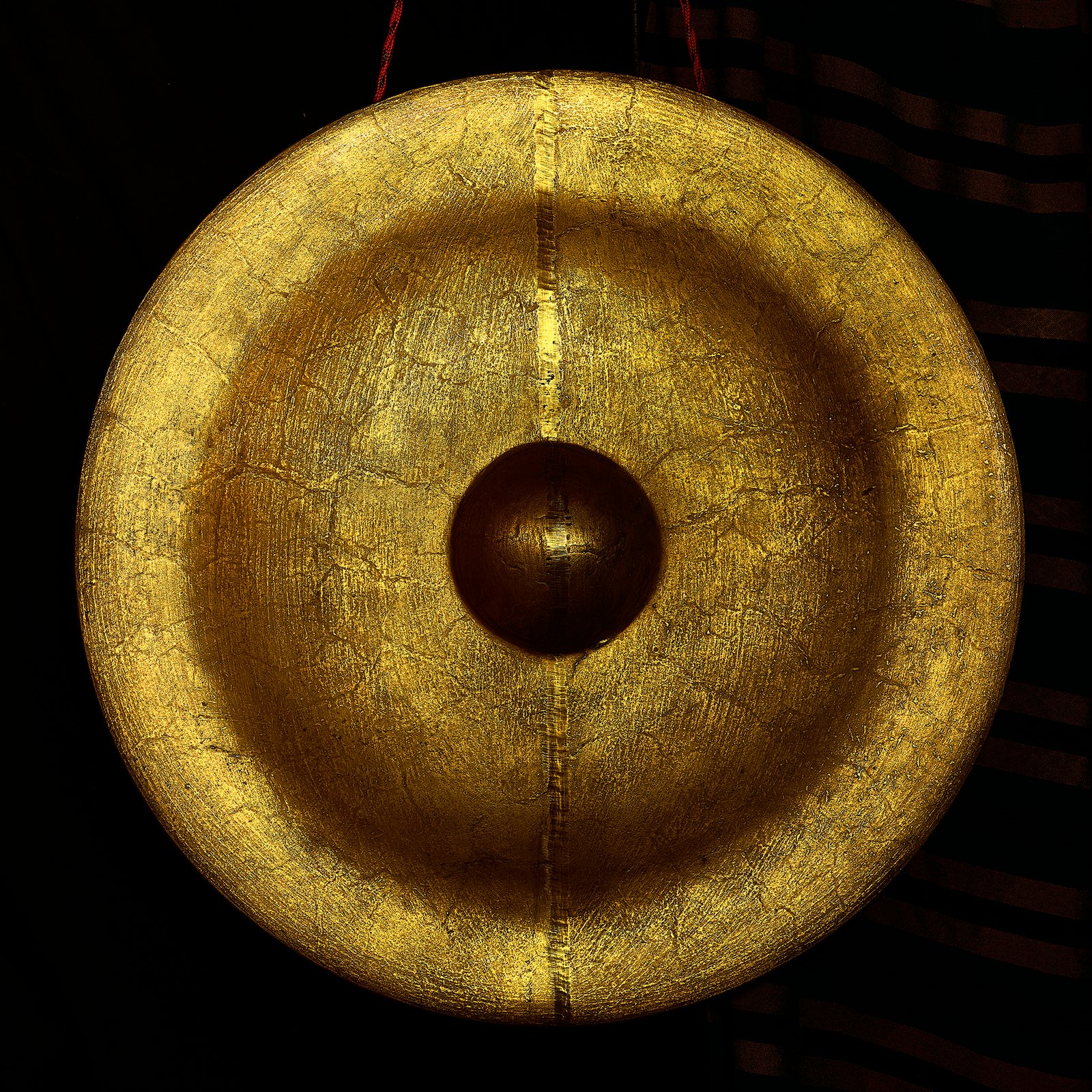
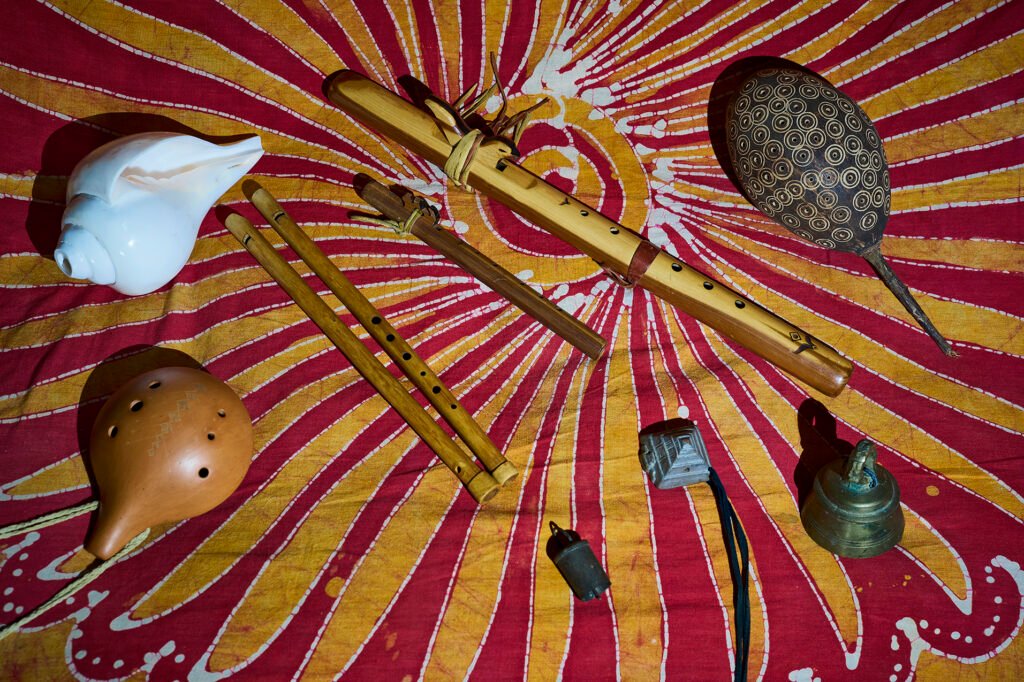
The Sounds of Spirit palette includes didgeridoo, crystal bowls, gongs, voice, flutes and other resonant instruments.
Each contributes a different balance of fundamental tone, harmonic complexity, attack, decay, breath and physical vibration.
The precise combination changes between performances without becoming a catalogue of separate products.
A stable centre that never becomes static
The didgeridoo is an ancestral Aboriginal instrument from one of the world’s oldest continuous living cultures.
The musician shapes its continuous drone through the lips, tongue, jaw, cheeks, glottis and vocal tract. Circular breathing sustains the foundation while the harmonic spectrum continues to change.
The result is central to Sounds of Spirit: a low-frequency anchor that remains alive through continuous human variation.
The value of microvariation
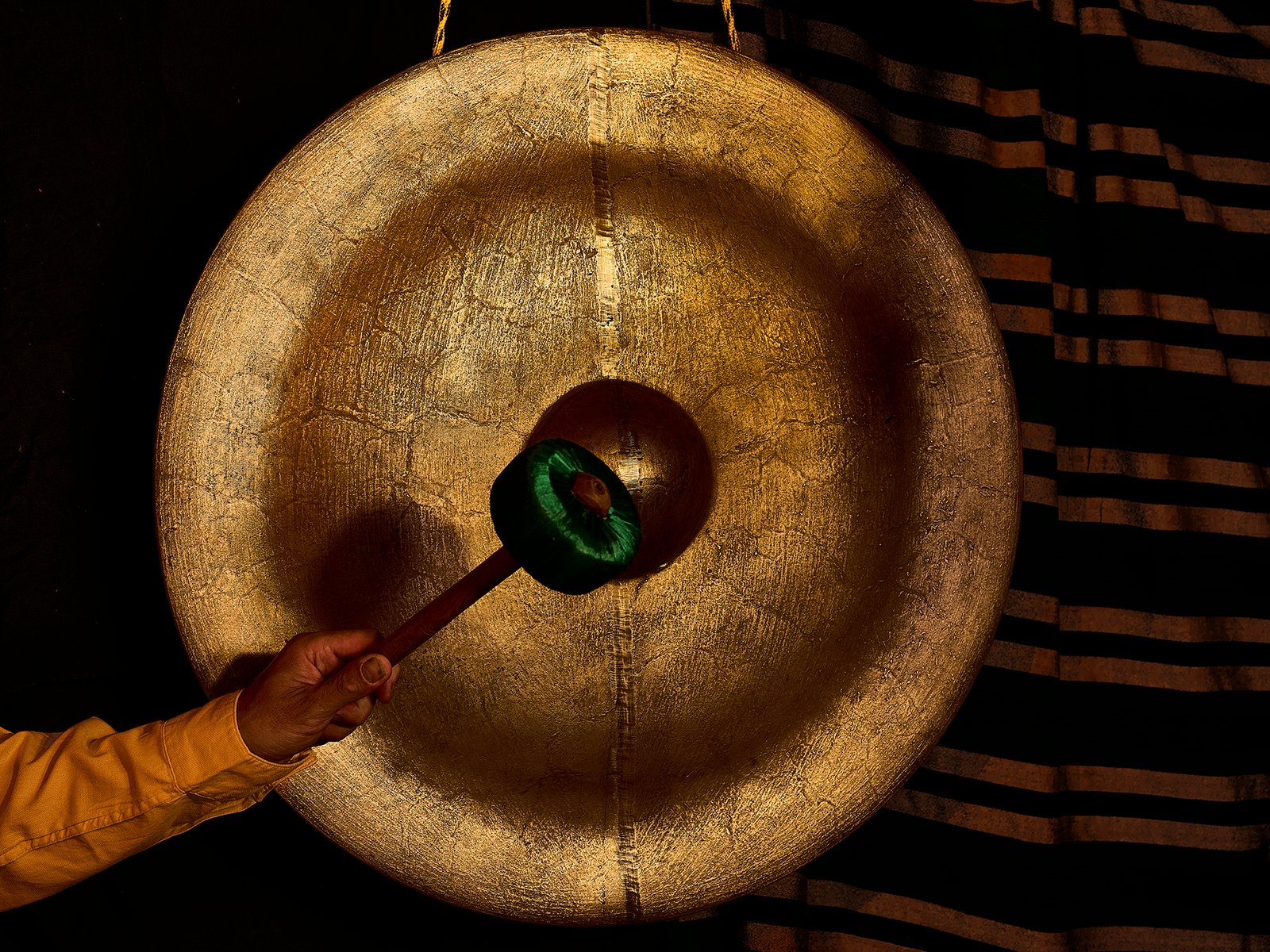
Electronic systems generate frequencies with great precision. Living instruments contribute continuous microvariation.
No breath, strike, resonance or decay is exactly repeated.
Stability provides an anchor. Variation keeps perception engaged and prevents the field from becoming mechanically predictable.
Sound is heard and felt
Sound reaches the listener as auditory information and as physical vibration.
Low resonant instruments such as didgeridoo and gongs can create a strongly embodied listening experience, particularly in physical spaces.
Some participants experience this combination of vibration, attention and resonance as grounding, regulating or deeply restorative.
Sound shaped in the moment
A live musician continuously adjusts timing, intensity, harmonic content, spatial position and silence.
The same nominal pitch or musical phrase is not necessarily the same experience when reproduced from a file and when created by a responsive person in real time.
For Sounds of Spirit, liveness is not an aesthetic addition. It is part of the method.
Ancestral breath meets contemporary sound research
Sounds of Spirit does not attempt to modernise the didgeridoo or replace ancestral sound with electronics. It creates a dialogue:
Ancestral sound ↔ Contemporary psychoacoustics
Living resonance ↔ Digital precision
Human presence ↔ Repeatable technology